
Gutter Guards in Queen Creek, AZ
A Southeast Valley monsoon delivers dust first and rain second. That sequence is exactly what a screen guard is wrong for — and why we fit micro-mesh across Queen Creek.
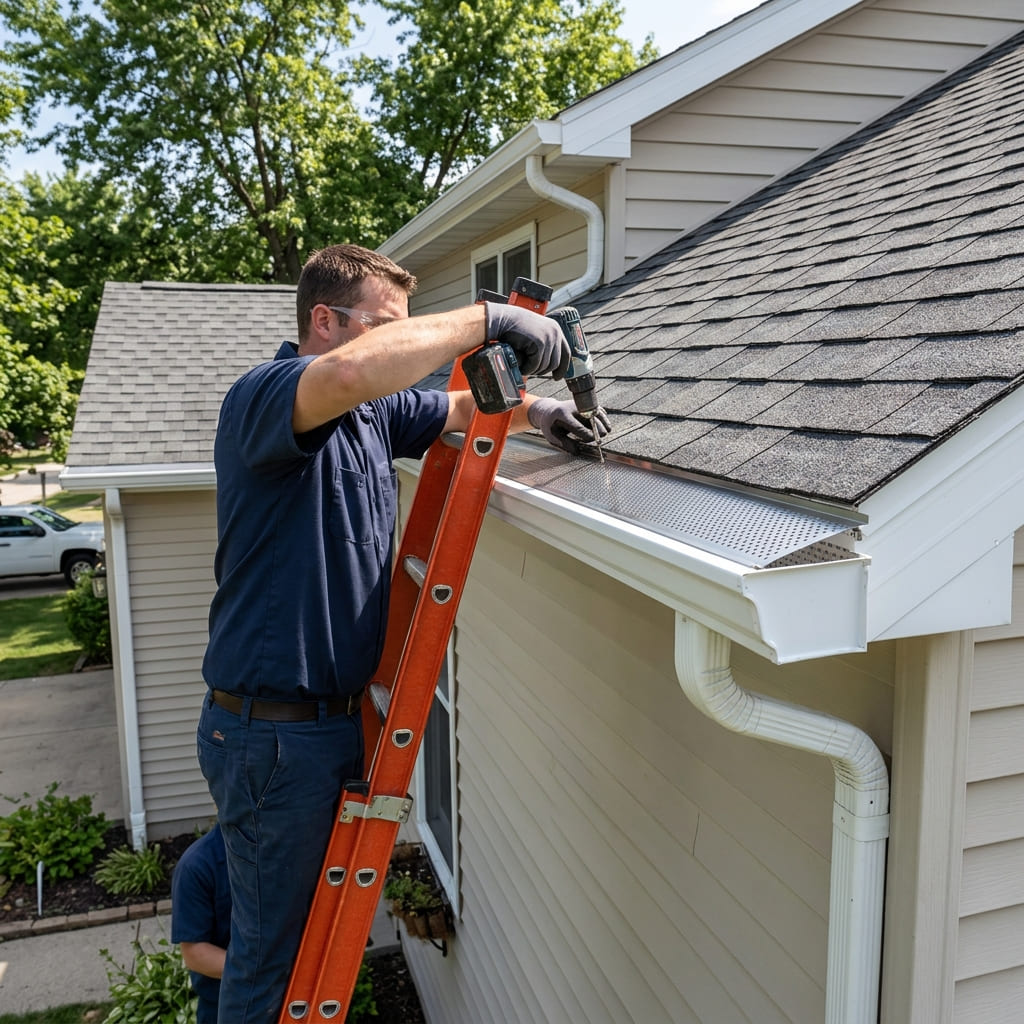
Gutter Guards for Queen Creek homes.
Queen Creek’s monsoon has a specific shape, and it decides which gutter guard is worth fitting here. A summer cell in the Southeast Valley commonly arrives as a wall of blown dust and then drops concentrated rain a few minutes behind it. The system has to move a hard burst of water through a run the dust has only just finished loading.
AZ Gutter Pros fits gutter guards throughout Queen Creek — the San Tan Mountain foothills, the Ironwood Crossing area, Church Farm, Queen Creek Station, and the established horse and ranch properties.
That sequence is precisely what defeats a screen guard. Screen is engineered to stop leaf-sized debris, and it does that well; it is nowhere near fine enough to stop dust. So the dust passes through and settles into the run, hardens into a crust the first time it gets wet, and because there is now a guard fitted over the top, nobody is looking down into the gutter to notice. Stainless micro-mesh is the style that matches this debris — and getting that right matters more in a town where the gutter has to perform at full capacity within minutes of the dust that loaded it. If you have been searching for leaf guards, which is what most of this product category is called, the name is a poor guide out here: leaves are close to the least of it. Our Queen Creek gutter services page covers the wider Southeast Valley picture.
Queen Creek runs from brand-new master-planned streets to established agricultural land, and the two need different things. AZ Gutter Pros handles both, with an honest assessment and a written price before any work starts.
What a Queen Creek guard job includes
What actually clogs gutters in Queen Creek.
What loads a Queen Creek gutter, and what each one needs from a guard:
| What lands in the gutter | Where it comes from | What handles it |
|---|---|---|
| Blown dust & fine grit | The leading edge of Southeast Valley monsoon cells | Stainless micro-mesh — screen is nowhere near fine enough to stop it |
| Palm fronds, fibre & seed pods | Mature landscaping palms across both new and established lots | Bulk sheds off micro-mesh where the roof has a sound pitch |
| Field & agricultural dust | Surrounding former farmland, heaviest on windy spring days | Micro-mesh, with an occasional rinse so it does not glaze over |
| Roof granules | Ageing tract-build shingle in full sun | Any adequately fine mesh |
Dust first, downpour second — and the buildings nobody checks.
The one-two punch is the reason guards get specified wrong in this town. A homeowner looks at a mature palm near the roofline, concludes that fronds and seed pods are the problem, and buys a screen guard rated to stop exactly that. It works — the fronds stay out. Meanwhile the thing that is actually filling the gutter, blown dust fine enough to pass straight through the screen mesh, keeps arriving ahead of every storm and compacting in the bottom of the run.
That produces the worst kind of clog, because the guard has removed the visible symptom while leaving the cause. Nobody checks a gutter they have guarded. The system is discovered to be restricted when a cell hits and water comes over the front edge at the entry, which on a fast-built tract home is frequently a system with little margin to begin with — builder specifications tend toward the minimum number of downspouts for the roof area. So we count outlets and measure roof area before quoting guards. If the outlet count is short, adding a downspout usually costs less than the guard run and fixes the thing that was genuinely wrong.
The outbuildings are where guards do their most useful work on a Queen Creek property, and they are consistently the part left out of a quote. Barns, tack rooms, shade structures, and covered parking shed as much monsoon water as the house does, and they receive a fraction of the attention. Nobody walks out to look at a barn gutter in June.
The result is that a clogged outbuilding run is diagnosed by its consequences rather than by inspection — paddock footing that turns to mud and stays that way, a trenched drip line along a barn wall, water standing against post bases and slab edges after every storm. On a working horse property that is a usability problem as much as a maintenance one. We size each structure to its actual roof area rather than defaulting to a residential figure, quote them separately so the work can be phased by priority, and place outlets to keep discharge off high-traffic ground and away from doorways. Regular gutter cleaning still has a place on a guarded system here, and we will tell you honestly how often.
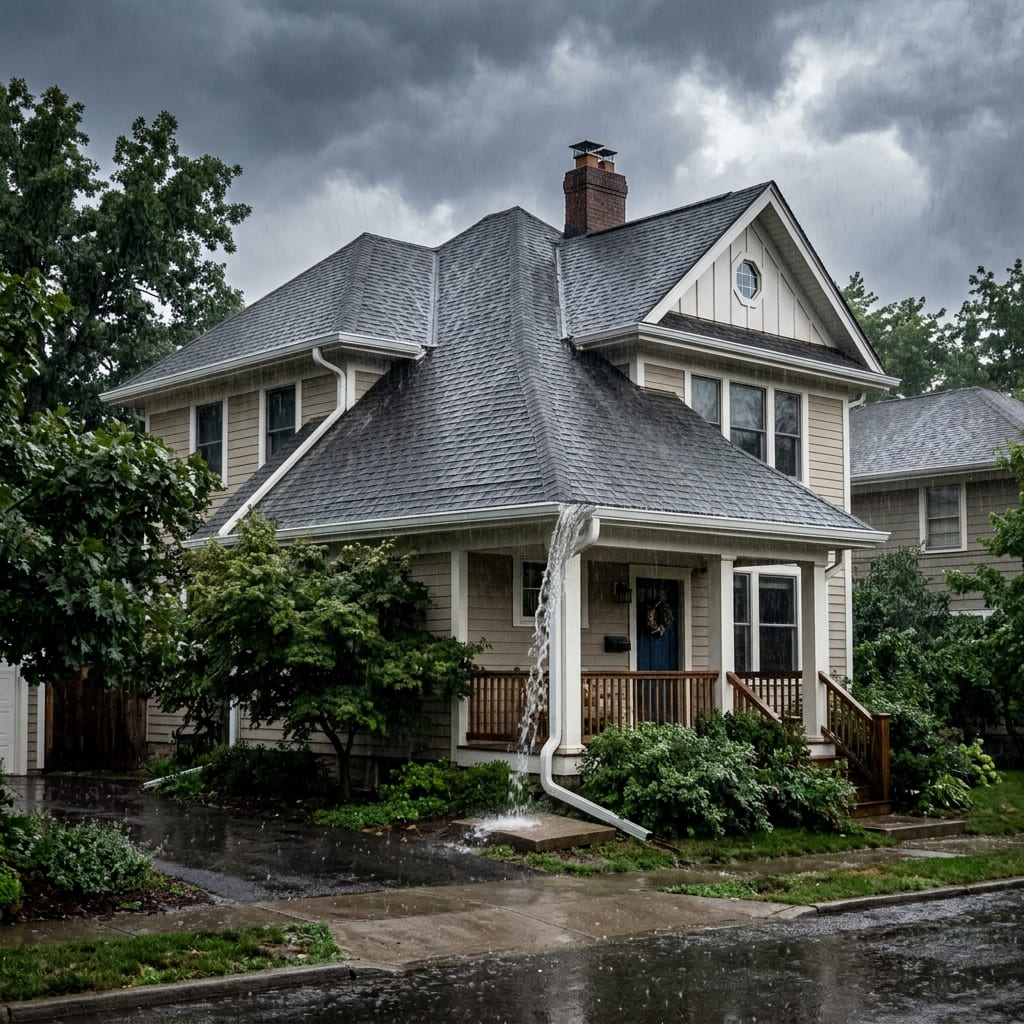
Gutter Guards cost in Queen Creek.
Guards are priced per linear foot, with outbuildings quoted per structure. Micro-mesh is what we normally recommend here because the defining debris is dust rather than leaves:
| Scope | Typical range |
|---|---|
| Stainless micro-mesh guards | $8 – $16 / linear ft |
| Aluminum screen guards | $4 – $8 / linear ft |
| Barns, tack rooms & covered structures | Quoted per structure |
| Guards + clear-out of hardened dust crust | Bundled rate |
If your home is a newer tract build that already overflows, ask us to price the downspout work before the guards — on an under-served system that is the change that actually fixes it. Every job gets a free written estimate before work begins.
Where we fit guards in Queen Creek.
Also covering nearby Gilbert, Chandler, Mesa, San Tan Valley, Gold Canyon — and much of the Southeast Valley. Not sure if you are in range? Call (602) 536-0941 and ask.
Gutter Guards questions from Queen Creek homeowners.
Do gutter guards stop the dust out in Queen Creek?
Micro-mesh does; screen guards do not, and that distinction matters more here than almost anywhere. Southeast Valley monsoon cells arrive as blown dust ahead of the rain, and dust particles pass straight through screen mesh, which is designed to stop leaf-sized debris. Once in the run they harden into a crust the first time they get wet. Stainless micro-mesh is fine enough to keep that load on the surface. If a guard is being sold to you on palm debris alone, it is being sold against the wrong problem for this town.
My newer Queen Creek home already overflows — will guards fix it?
Probably not on their own, and we would rather say so before taking the job. Tract builders commonly fit the minimum number of downspouts for the roof area, so the system overflows because it is short of capacity rather than because it is dirty. A guard keeps debris out but adds nothing to capacity, so the overflow continues and the guard gets blamed. AZ Gutter Pros counts outlets and measures roof area first. If the count is short, adding a downspout usually costs less than the guard run and is the change that actually works.
Do you fit gutter guards on barns and horse property outbuildings?
Yes, and they are often where guards deliver the most value on a Queen Creek property. Barns, tack rooms, shade structures, and covered parking shed as much storm water as the house but get inspected far less, so a clogged run out there is usually noticed only when the paddock turns to mud or the drip line trenches along a wall. We size each structure to its real roof area rather than a residential default, quote them separately so you can phase the work, and route discharge away from doorways and high-traffic ground.
Will palm debris defeat micro-mesh guards?
Not usually, though it depends on the roof. Fronds, fibre, and seed pods sit on top of a micro-mesh surface rather than passing into it, and on a roof with reasonable pitch wind and rain move that bulk off over time. Where it becomes a genuine limitation is a low-pitch run directly beneath a mature palm, where a dropped frond is heavy enough to stay put. We will point out which of your rooflines fall into that category during the quote rather than after installation, so you know where a service visit will still be wanted.
How much do gutter guards cost in Queen Creek?
Micro-mesh sits in the $8 to $16 per linear foot band once fitted, and screen around half that — though screen is the wrong product against dust, so the cheaper line rarely represents a saving here. What moves your number most on a Queen Creek property is not the house, it is how many outbuildings go on the same quote. Barns, tack rooms, and covered structures are measured and priced individually so you can start with whichever is causing the most damage and phase the rest.
Gutter Guards in other cities we cover.
Debris is local, so the right guard is too. Each of these pages covers what actually lands on a roof in that town.