
Gutter Guards in Prescott Valley, AZ
StoneRidge to Granville to Pronghorn Ranch — micro-mesh guards for fine juniper litter and wind-carried basin debris, fitted only where the gutter underneath is actually worth protecting.
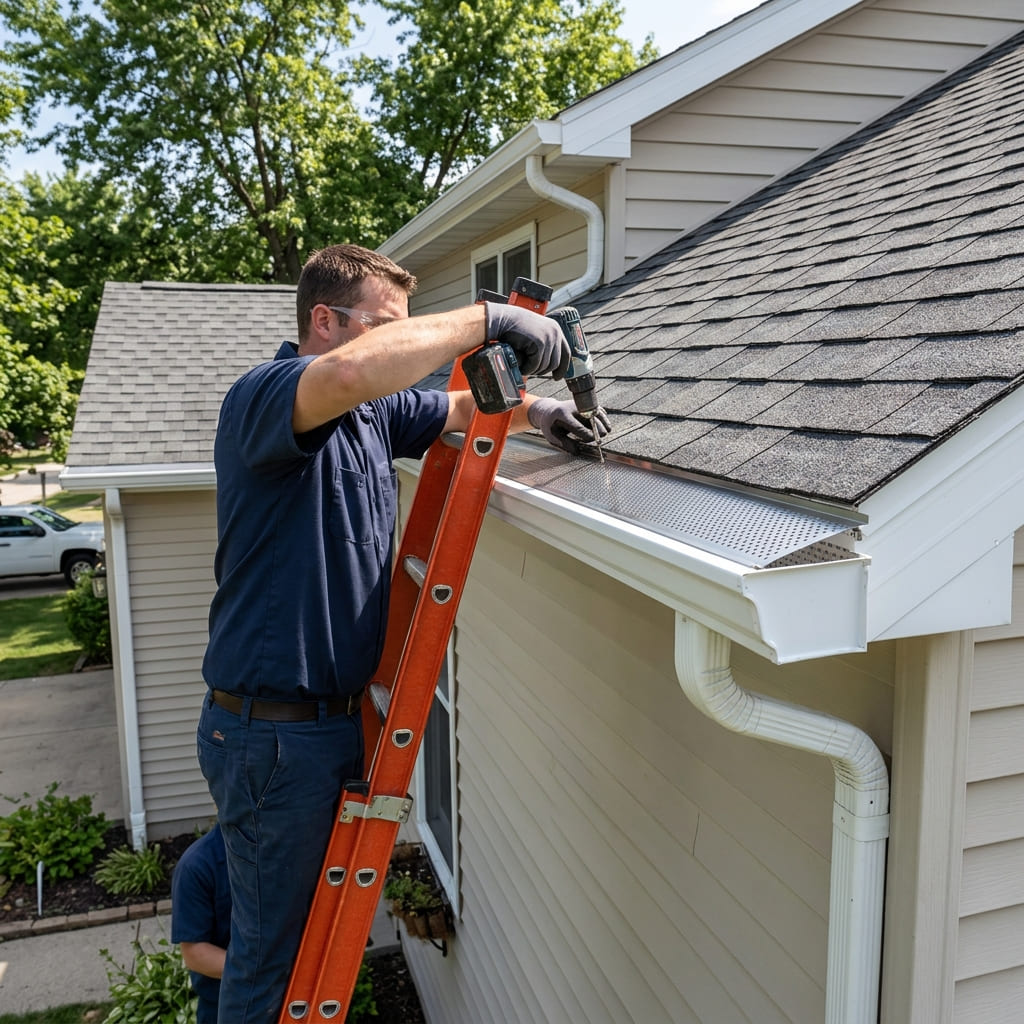
Gutter Guards for Prescott Valley homes.
Prescott Valley is a genuinely good market for gutter guards, with one caveat about timing that is worth understanding before you buy. The housing profile here is close to ideal: simple subdivision rooflines, mostly single and two-storey, and a fine debris load that a guard handles well. The caveat is that much of this town’s builder-grade sectional gutter is reaching the end of its service life at the same time, and fitting quality guards to a run that needs replacing in two winters means paying for the guard twice.
AZ Gutter Pros fits gutter guards across Prescott Valley — StoneRidge, Granville, Pronghorn Ranch, Viewpoint, Santa Fe Springs, and the older sections along the Glassford Hill corridor.
The debris here is fine rather than bulky: juniper and pinyon litter from the native stands around the basin, plus grassland seed head and chaff that the wind carries in off open ground. That is precisely the profile that defeats screen and louver guards, which are engineered to stop leaves and will pass fine litter through into the run. Stainless micro-mesh is the style that matches this town — and if you have been shopping for leaf guards, which is how these products are usually advertised, that name is worth setting aside here, because leaves are not what fills a Prescott Valley gutter. And at roughly 5,100 feet there is a second job for a guard that lower-elevation markets never think about — keeping the run empty going into winter, because a gutter holding wet autumn debris on a freezing night holds ice instead of draining. Our Prescott Valley gutter services page covers why sectional systems struggle at this elevation.
Before we quote guards, AZ Gutter Pros looks at what they would be fitted to. If your gutters are sound, guards are one of the few upgrades on this list that genuinely pays for itself here. If they are not, we will say so and quote the honest sequence instead.
What a Prescott Valley guard job includes
What actually clogs gutters in Prescott Valley.
What a Prescott Valley gutter actually collects, and what each load needs:
| What lands in the gutter | Where it comes from | What handles it |
|---|---|---|
| Fine juniper & pinyon litter | Native stands across the Lonesome Valley basin — year-round | Stainless micro-mesh; screen and louver guards let it through |
| Grassland seed head & chaff | Wind-carried off open basin ground, heaviest in spring | Micro-mesh sealed at the roof edge — wind drives it in from the side |
| Roof grit & granules | Ageing builder-grade shingle across the 1980s–2000s phases | Any adequately fine mesh |
| Wet debris sitting through a freeze | Autumn litter left in the run into November | The guard’s real winter job — keep the run empty before it can hold ice |
Guards, freeze-thaw, and getting the order of operations right.
Order of operations is the honest conversation to have in this town first, because Prescott Valley’s housing went up in subdivision phases from 1978 onward and whole streets therefore share one builder specification installed in one year. Builder-grade sectional aluminum has a fairly predictable service life at this elevation, so an entire phase tends to reach the end of it together. A gutter guard is fitted to the gutter — so when the gutter is replaced, the guard comes off with it.
That means the sequence matters more than the product. If your run has opening seams, a flattened or sagging section, or hangers pulling out of the fascia, guards are the wrong purchase this year and we will tell you that plainly. The better answer is either gutter replacement with guards fitted to the new seamless run at a reduced labor rate, or waiting. Where the run is sound — and plenty are, particularly across the newer phases — a guard on a simple subdivision roofline is one of the few upgrades here that genuinely pays back in reduced cleanings.
Winter is what gives a guard its second and less obvious value at 5,100 feet. The damage in Prescott Valley is done by freeze-thaw rather than by snow depth: water standing in a run freezes overnight, expands, and works at whatever joint or fastener it is sitting against, then melts and refills the slightly larger gap the next day. A run that goes into that cycle empty drains and dries. A run holding a season of wet juniper litter cannot drain, so it holds water, and then it holds ice.
Ice is substantially heavier than the water it came from, and it is what pulls hangers out of fascia rather than the debris itself. So the useful way to think about a guard here is preventive rather than cosmetic — it keeps the run clear through autumn so there is nothing left to hold water when the first hard freeze arrives. It also drives our scheduling recommendation: we prefer to fit guards in late summer or early autumn in this basin, after the season’s litter has been cleared out and before the freezing nights start, rather than in spring when the damage is already done. The same reasoning applies across the basin in Dewey and Chino Valley.
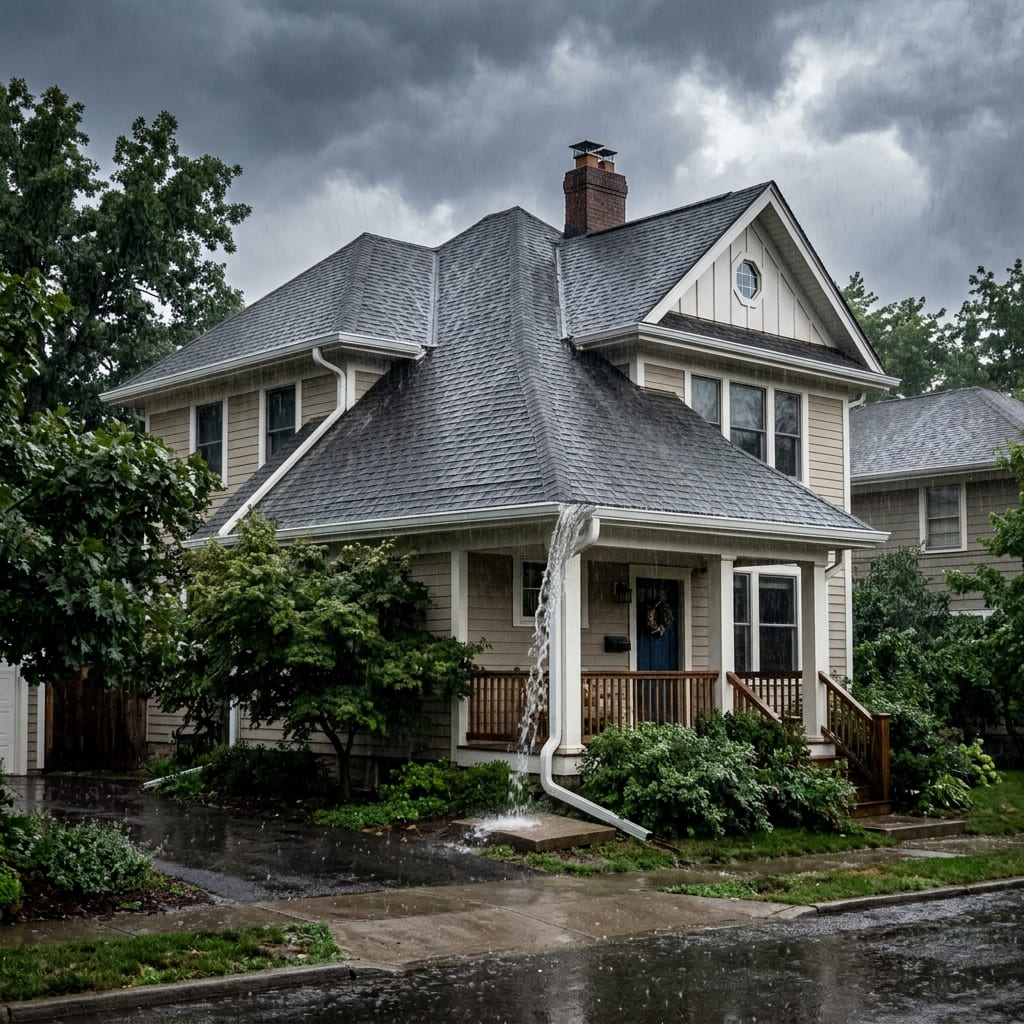
Gutter Guards cost in Prescott Valley.
Guards are priced per linear foot, and the material drives the range. Micro-mesh is what we normally quote in Prescott Valley because the debris here is fine:
| Scope | Typical range |
|---|---|
| Stainless micro-mesh guards | $8 – $16 / linear ft |
| Aluminum screen guards | $4 – $8 / linear ft |
| Guards + clear-out of existing runs | Bundled rate |
| Guards with a seamless replacement | Reduced labor rate |
If your existing gutters are near end of life, the bottom line on that list is usually the one worth pricing — fitting guards to a run that is about to be replaced means paying for the same guard twice. Every price is confirmed on a free written estimate before work starts.
Where we fit guards in Prescott Valley.
Also covering nearby Dewey, Prescott, Chino Valley, Mayer, Paulden — and much of the Lonesome Valley basin. Not sure if you are in range? Call (602) 536-0941 and ask.
Gutter Guards questions from Prescott Valley homeowners.
Should I fit gutter guards or replace my gutters first?
Replace first if the run is failing, and we will give you a straight answer on site. A guard is fastened to the gutter, so replacing that gutter later means removing and usually rebuying the guard. If you are seeing opening seams in several places, a sagging or flattened run, or hangers pulling from the fascia, guards are the wrong purchase this year. The efficient sequence is a seamless replacement with guards fitted at the same visit, which carries a reduced labor rate because the setup and access are already there.
Do gutter guards help with snow and ice in Prescott Valley?
Indirectly, and it is worth being precise about how. A guard does not stop ice forming and we will not sell it as a snow solution — roof-plane snow guards are a separate product for a separate problem. What a guard does is keep the run empty through autumn, and an empty run drains rather than holding water that can freeze. Since freeze-thaw is what opens joints and pulls hangers at this elevation, keeping the gutter clear going into winter is a genuine preventive benefit, just not the one people expect.
What kind of guard works for juniper litter?
Stainless micro-mesh. Fine juniper and pinyon litter is small enough to pass straight through screen and louver guards, which are designed around leaf-sized debris, and once through it settles and compacts in the run where the guard now hides it from view. Micro-mesh keeps that litter on the surface where wind and rain can move it. This is also why guard reviews written for leaf-country markets do not transfer to the Prescott basin — the debris being tested is not the debris you have.
Does my HOA need to approve gutter guards?
In the master-planned communities — StoneRidge, Granville, Pronghorn Ranch and similar — architectural standards usually cover exterior colour and finish, and guards can fall under them alongside the gutters themselves. In practice this is straightforward, because a low-profile guard matched to the existing fascia or trim colour is almost always acceptable. Tell AZ Gutter Pros your community when you call and we will quote a compliant finish, and confirming with your association before work begins is still the safe order of operations.
When is the best time of year to fit guards in Prescott Valley?
Late summer or early autumn is our preference here, and the reason is the freeze cycle. Fitting after the season’s litter has been cleared but before freezing nights arrive means the run goes into winter empty, which is exactly when an empty run matters most. Spring fitting still works and we do plenty of it, but it protects you for the following winter rather than the one immediately ahead. If your gutters are already holding a season of debris, the clear-out is the part that cannot wait.
Gutter Guards in other cities we cover.
Debris is local, so the right guard is too. Each of these pages covers what actually lands on a roof in that town.