
Gutter Guards in Camp Verde, AZ
Where the Verde River, West Clear Creek and Wet Beaver Creek converge, it is the downspout outlet that fails first — and a mesquite pod is almost exactly the wrong shape for an elbow.
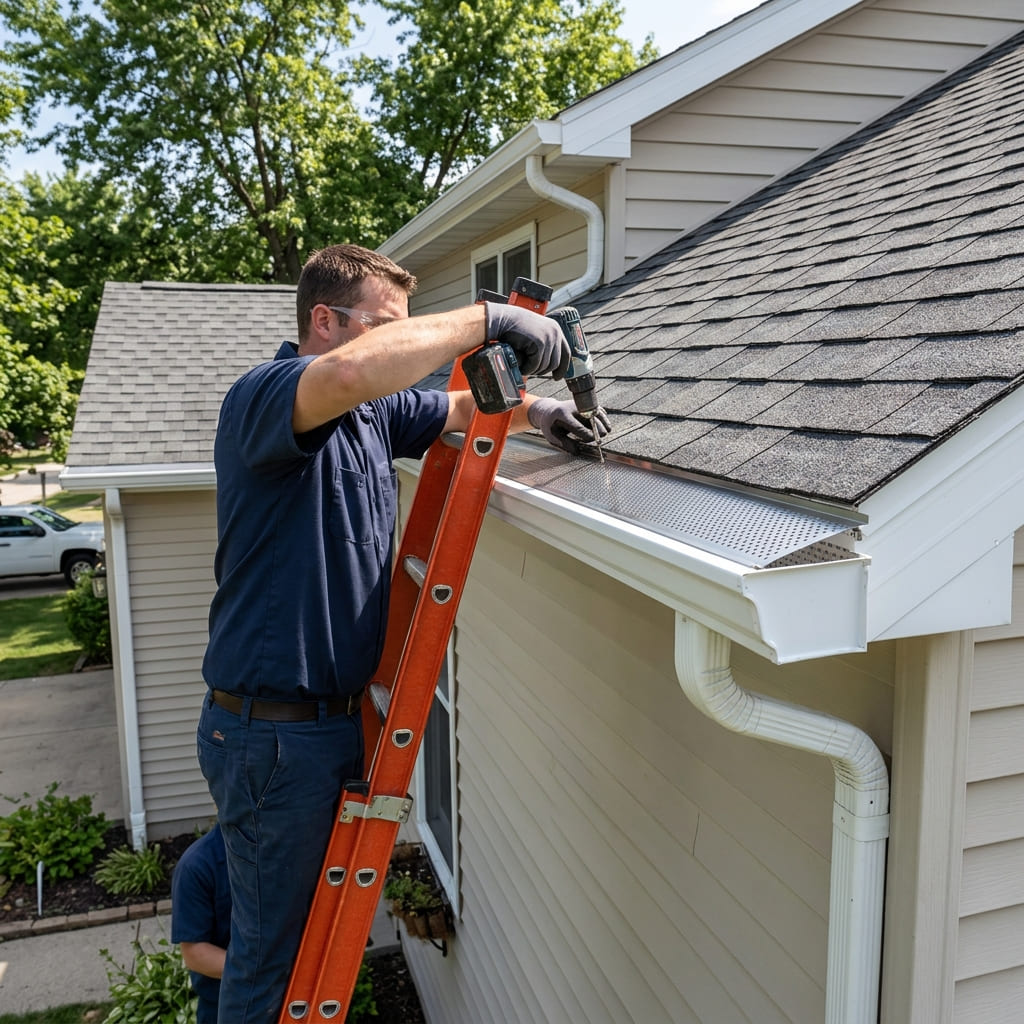
Gutter Guards for Camp Verde homes.
Camp Verde has a mixed debris load that is unusually hard on downspouts specifically. Where the Verde River meets West Clear Creek and Wet Beaver Creek, the riparian canopy drops broad sycamore and cottonwood leaves, fine twigs and bark litter, and mesquite seed pods — and a long straight mesquite pod is almost precisely the wrong shape to meet a downspout elbow.
AZ Gutter Pros fits gutter guards across Camp Verde — the Fort Verde and historic town centre area, the Verde River bottom and agricultural land, the West Clear Creek area, the SR-260 and Salt Mine Road corridor, and outlying acreage and horse properties.
The thing worth understanding here is where a guard actually earns its money. On most homes a guard is sold as protection for the gutter run itself. In Camp Verde the run is rarely what fails first — the outlet is. A pod or a straight twig passes through a coarse screen, travels the length of the run with the water, and lodges at the elbow, and from that moment the entire system backs up regardless of how clear the rest of it looks from the ground. That is why we specify micro-mesh here even on properties where the visible leaf load looks modest. It is not about volume; it is about shape — which is also why the industry habit of calling these products leaf guards misleads people in Camp Verde, where the item that actually stops your gutter working is a seed pod. Our Camp Verde gutter services page covers the wider floodplain picture.
AZ Gutter Pros walks the property before quoting, sizes each structure to its real roof area, and puts a written number in front of you before any work begins.
What a Camp Verde guard job includes
What actually clogs gutters in Camp Verde.
What a Camp Verde gutter collects, and what each load needs from a guard:
| What lands in the gutter | Where it comes from | What handles it |
|---|---|---|
| Mesquite seed pods | Mesquite across the river bottom and outlying acreage | Micro-mesh — pods pass through screen and lodge at the downspout elbow |
| Broad leaves | Sycamore and cottonwood at the creek confluences | Micro-mesh with real slope so the surface sheds them |
| Fine twigs & bark litter | Mixed riparian canopy, year-round | Micro-mesh; screen collects and holds it in the run |
| Agricultural dust | Working farmland and unpaved access roads | Micro-mesh — wants an occasional rinse to stay free-flowing |
The outlet is what fails here — and why timing matters on a floodplain.
Thinking outlet-first is the shift that makes guard decisions in Camp Verde make sense. A gutter run holding some leaf litter still moves water; it drains more slowly and it looks untidy, but the system works. A plugged downspout elbow does not degrade performance, it ends it — water backs up the full length of the run and goes over the front edge, and it does that whether the run itself is clean or not.
On a typical home here with only two or three downspouts, losing one to a lodged mesquite pod means losing a third or a half of the system’s capacity in a single storm. That is why the debris shape matters more than the debris quantity in this town, and why we recommend micro-mesh on properties where a homeowner might reasonably think the tree cover looks light enough to skip it. We also count outlets and check their sizing at the same visit, because fitting a guard to an under-served run is protecting a system that was going to overflow anyway.
Timing is the genuinely local part of the argument, and it comes from the ground rather than the roof. Because the Verde River, West Clear Creek, and Wet Beaver Creek converge in this area, the soil around a Camp Verde property is often already carrying water before a monsoon cell arrives — the water table sits considerably closer to the surface here than in the high-desert towns west of the valley. So roof water released at the wrong moment has nowhere left to infiltrate.
That makes a blocked gutter meaningfully worse on this ground than on high desert. It does not simply spill; it spills onto saturated ground that cannot take it, directly at the foundation, in the precise hour the ground can least afford the extra volume. Standing water against a foundation is the mechanism behind structural damage rather than cosmetic staining, which is the real case for guards in Camp Verde — not convenience, but certainty that the system is clear during the few weeks each year when it genuinely matters. A guard does not replace a proper downspout and discharge plan on a floodplain lot, and we will not present it as one. It removes the failure that most often defeats a good discharge plan.
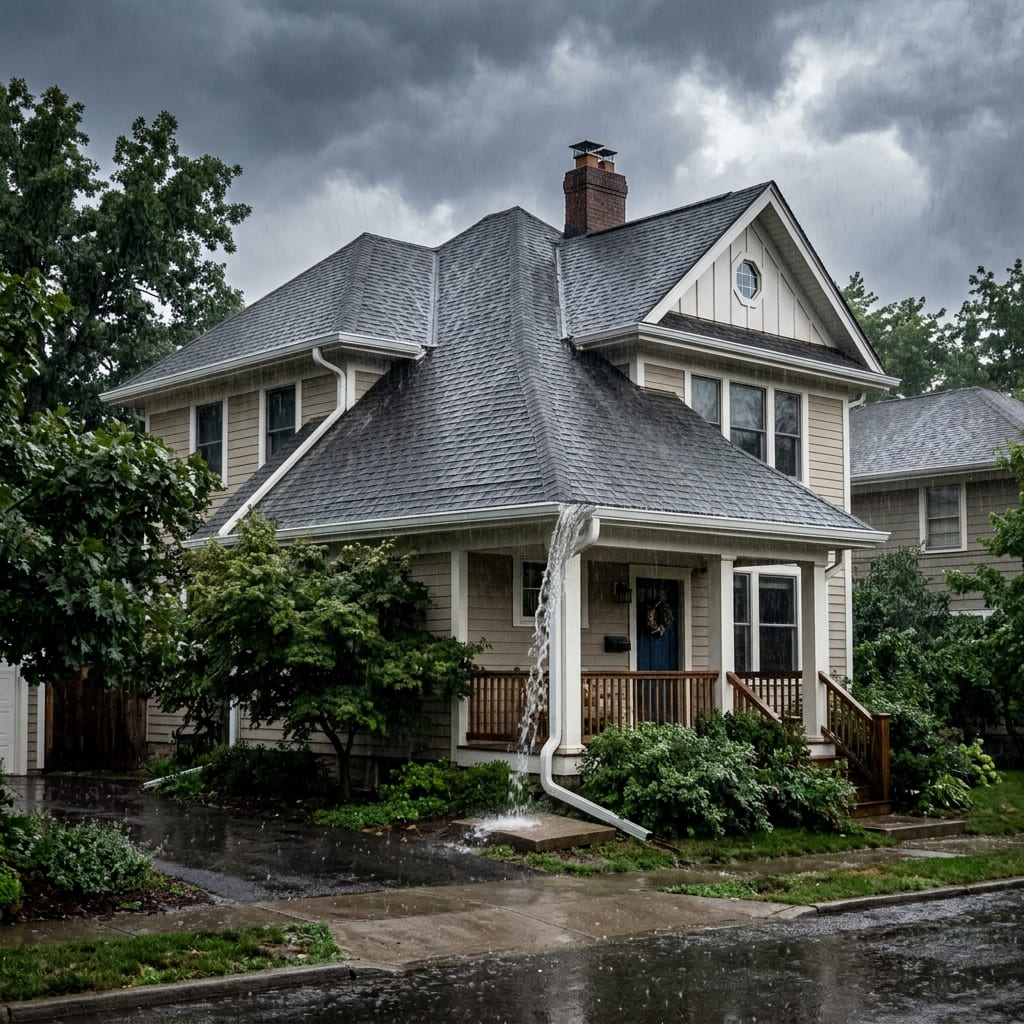
Gutter Guards cost in Camp Verde.
Guards are priced per linear foot, with outbuildings quoted per structure so the work can be phased across a property:
| Scope | Typical range |
|---|---|
| Stainless micro-mesh guards | $8 – $16 / linear ft |
| Aluminum screen guards | $4 – $8 / linear ft |
| Barns, hay storage & horse shelters | Quoted per structure |
| Guards + clear-out of runs and outlets | Bundled rate |
Screen is listed for completeness — it does not stop a mesquite pod, which is the specific failure this market suffers from, so we rarely recommend it here. Properties on outlying agricultural acreage sit well apart, so travel is stated clearly on the written estimate rather than added afterwards.
Where we fit guards in Camp Verde.
Also covering nearby Cottonwood, Sedona, Rimrock, Lake Montezuma, Cornville — and much of the Verde Valley river bottom. Not sure if you are in range? Call (602) 536-0941 and ask.
Gutter Guards questions from Camp Verde homeowners.
Do gutter guards help with mesquite pods?
Micro-mesh does; screen guards do not, and this is the specific reason we specify micro-mesh across Camp Verde. A mesquite pod is long, narrow, and rigid — it passes through a coarse screen without difficulty, travels the run with the water, and lodges at the downspout elbow. Once that happens the whole run backs up regardless of how clean it otherwise is. Micro-mesh keeps the pod on the surface. On a home with two or three downspouts, one lodged pod can cost you a third of your drainage capacity in a single storm.
My property is on the river bottom — are guards actually worth it?
They are, and arguably more so than on higher ground, though it is worth being clear about what they do. Because three waterways converge here, the soil around your home is often already saturated when a monsoon cell arrives, so an overflowing gutter is not just spilling — it is putting roof water at the foundation on ground that cannot absorb it, at the worst possible moment. Guards give you certainty that the system is clear during those weeks. What they cannot do is fix a high water table, and the discharge plan is still what makes the system effective.
Do you fit guards on barns, hay storage and horse shelters?
Yes, and on Camp Verde properties they are often the buildings that need it most. Outbuildings shed water in one continuous sheet along the drip edge, which trenches ground, undermines slabs and post bases, and turns paddock footing into mud that stays wet for days on river-bottom soil. They also get inspected far less often than the house, so a clogged run out there is usually discovered by its consequences. We size each structure to its actual roof area rather than a residential default and quote them separately so you can phase the work.
How often should guarded gutters be checked in Camp Verde?
Once a year is realistic for most properties here, against twice a year for an unguarded system under the same canopy. The visit that matters is the one before monsoon season, and the focus shifts from digging out the run to clearing the guard surface and confirming the outlets and elbows are free. On acreage with heavy mesquite or a mature riparian canopy directly overhanging the roof, we would still suggest a second look after the autumn drop.
How much do gutter guards cost in Camp Verde?
Micro-mesh lands between $8 and $16 a linear foot installed; screen is cheaper and does not stop a mesquite pod, which makes it a false economy on this ground. Because Camp Verde properties tend to carry several structures rather than one, we measure the house, the barn, and the shelters separately and let you decide the order — most owners start wherever runoff is doing visible damage to footing or post bases. Travel out to agricultural acreage is written into the estimate up front.
Gutter Guards in other cities we cover.
Debris is local, so the right guard is too. Each of these pages covers what actually lands on a roof in that town.