
Gutter Installation & Repair in Taylor, AZ
Seams that keep splitting on a gutter with nothing else wrong? That is thermal movement on a long run. AZ Gutter Pros fits a slip joint instead of more sealant — free estimates in Taylor.
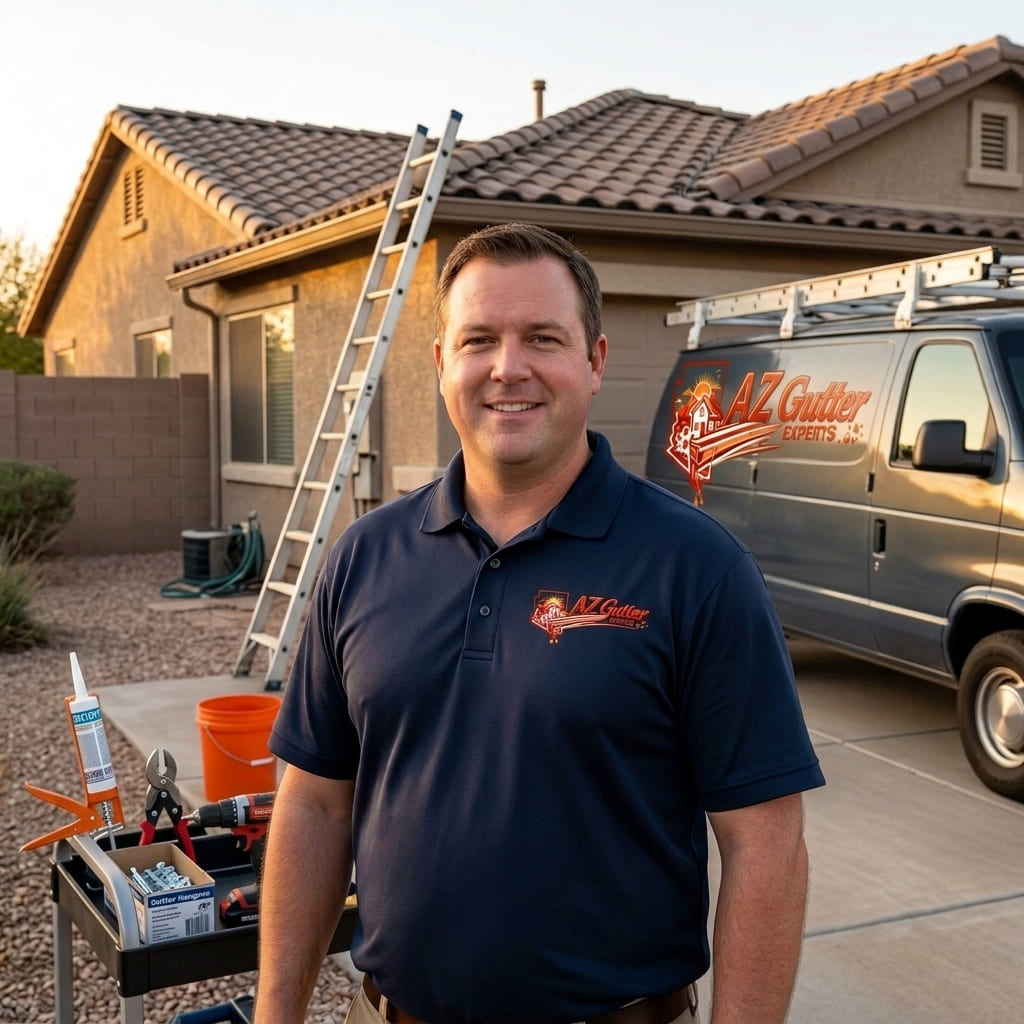
Your local gutter company in Taylor.
Taylor is a genuinely separate town of about 4,400, five miles south of Snowflake at 5,700 feet, and AZ Gutter Pros installs and services gutters right across it. It takes roughly 12 inches of precipitation a year and swings from single-digit January mornings to high-nineties July afternoons. The buildings are the opposite of the historic masonry up the road — big lots, long low ranch houses, shops, barns and equipment sheds, often with one unbroken roof edge running fifty, sixty or eighty feet.
We cover Main Street and the older center, the Silver Creek bottom and the fields, the rodeo grounds and Papermill Road, Bourdon Ranch Road, and the Shumway and Highway 77 corridors.
A long simple run looks like the easy version of this job, and in most ways it is — no valleys concentrating flow, no cut-up geometry. But it brings a failure that a house full of short runs never sees, and it is the most common reason we get called back to a building in this valley. Not blockage, and not pitch. Aluminum moves 0.0000128 inches per inch per degree Fahrenheit, which on a sixty-foot run across the temperature range this metal actually sees works out close to an inch between January and July.
If the run is pinned rigidly at both ends, which is how a great many of them are installed, that inch gets taken out on the end caps, the mitres and the hanger holes instead.
Which is why the repair we are called out for so often turns out to be a split seam or an elongated hanger hole on a system with nothing else wrong with it. More sealant buys a season. A properly placed expansion joint fixes it, and it is a small job next to the re-hang you are heading for otherwise. We quote either one free and in writing.
Neighborhoods & areas we cover in Taylor
Every gutter service, available in Taylor.
Seamless Gutters in Taylor, AZ
Formed in one continuous length on site, which is the right call on a long Taylor eave — but a genuinely long run still needs a planned expansion joint rather than being pinned solid at both ends.
Gutter Cleaning in Taylor, AZ
Field dust, cottonwood along Silver Creek and chaff off the surrounding ground. Long runs drain to few outlets, so a single blocked drop backs up far more trough here than it would on a cut-up roof.
Gutter Guards in Taylor, AZ
Useful on the runs you cannot easily reach — shop roofs, barns and two-story elevations. We fit types that sit in the trough without pinning the run and restricting the movement it has to make.
Downspout Installation & Repair in Taylor, AZ
Long runs need more drops than most people expect, spaced so no single length of trough is carrying more than it should. Straps get fitted to allow movement rather than clamping the pipe rigid.
Not sure which you need in Taylor? Call (602) 536-0941 and we’ll point you the right way.
The advantage of hiring locally in Taylor.
Expansion built into long runs
Anything much over forty to fifty feet gets a planned slip joint at the high point, so the run has somewhere to go instead of tearing at your end caps and hanger holes.
We fix the cause, not the symptom
Re-sealing a split end cap on a long run buys a season. We would rather quote the joint that stops it happening than come back and re-seal it every year.
Outbuildings quoted with the house
Barns, shops and equipment sheds get looked at on the same visit at no extra charge, and long metal-roofed spans usually justify a heavier profile than the house needs.
A sixty-foot run is not a static object. It grows and shrinks nearly an inch a year, and that is what opens your seams.
Thermal movement is slow, invisible and relentless, which is why it gets blamed on workmanship. The gutter does not travel an inch in one go — it creeps a few thousandths twice a day, every day, working at whatever is holding it.
The damage we get called to is always the same short list. Oval hanger holes, because the screw stays still and the trough slides past it. End caps weeping at the top corner, where the sealant bead is thinnest and has been stretched and compressed several thousand times. Mitres opening on the outside of the joint. Spike-and-ferrule systems on older Taylor outbuildings walking out of the fascia a fraction at a time until the front lip drops and the run stops holding pitch. On long dark runs, a rippled look along the face where the metal has nowhere to grow lengthwise. None of that is a material defect. It is a system installed as though it would stay the same size.
We build for it, and it changes four things on the quote.
Any continuous run much over forty to fifty feet gets a purpose-made expansion joint — a lapped, sealed slip connection that lets the two lengths move against each other while staying watertight — placed at the high point so no standing water ever sits over it. Hidden hangers hold the trough without clamping it rigid, spaced closer than desert standard because a run at this elevation also carries snow and ice in January. The run is anchored deliberately at one point and allowed to slide everywhere else, rather than screwed down hard throughout and left to tear itself apart. And we add intermediate outlets, roughly every thirty to forty feet, because one drop at each end of a seventy-foot run sends the whole length’s flow through two openings and leaves the middle carrying water a long way.
Colour is part of this conversation too, and it is better had at the estimate than in year five. A dark bronze or black run in full Taylor sun gets considerably hotter than a white or almond one and therefore moves further across the year, which lowers the length at which it needs a joint. We are straight about the trade-off in our own recommendation: an expansion joint is still a joint, and joints eventually need attention. It is a five-minute re-seal against a torn mitre and a fascia full of elongated holes.
A Taylor job prices in the normal Arizona range, $7 to $11 for a foot of finished seamless aluminum, with simple single-story rooflines at the lower end of it and long spans on shops and barns often justifying a heavier commercial profile and closer hanger spacing.
Outbuildings are worth doing for a practical reason: a metal-roofed shed sheds water fast and in a sheet, and without a gutter that water cuts a trench along the drip edge exactly where equipment turns and doors track. The expansion rules apply harder there, because a bare metal building runs hotter than a house. Retrofitting a slip joint to an existing run is a small job and usually the right first spend. AZ Gutter Pros covers the neighbouring towns as well — Snowflake deals with the opposite problem on its historic buildings, and Pinetop-Lakeside with what changes up in the timber. Call for a free written estimate.
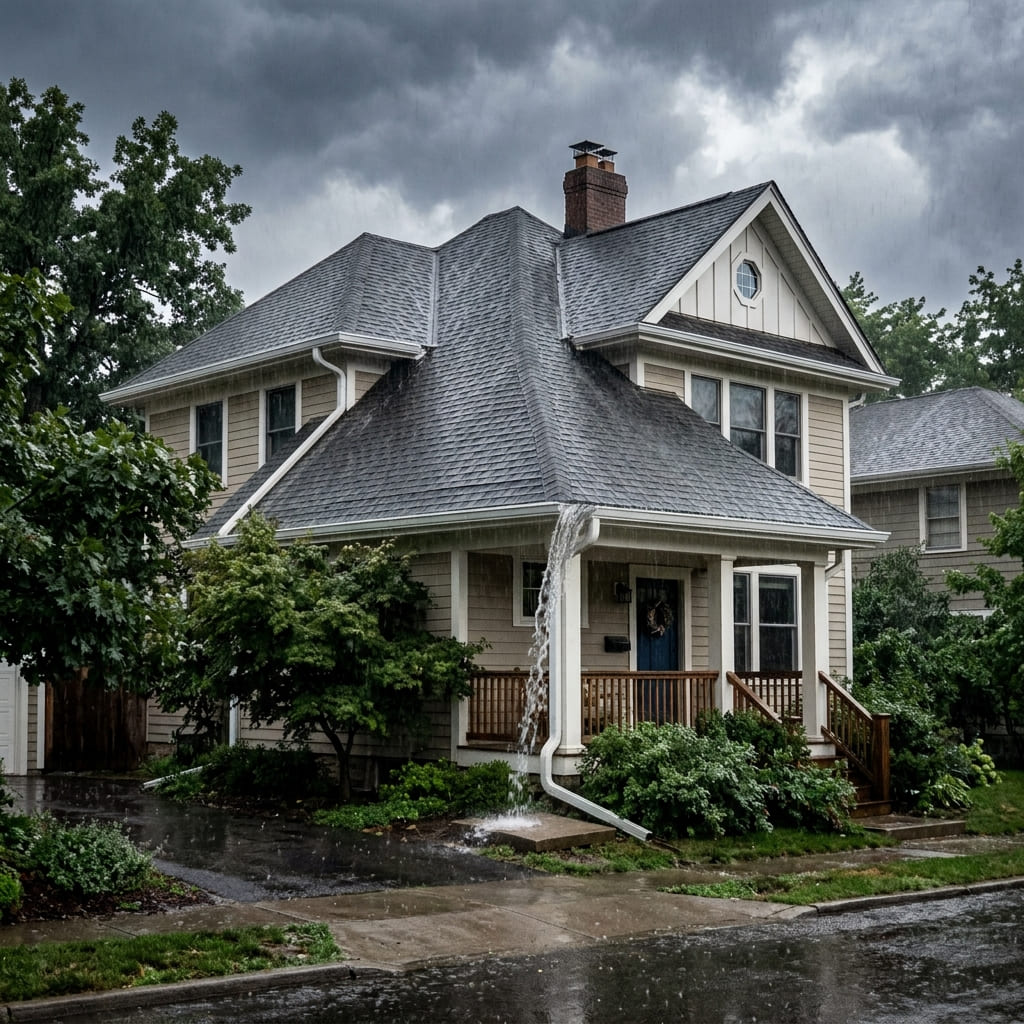
Good to know before you call in Taylor.
Why do my gutter seams keep splitting when nothing is blocked?
Thermal movement, almost certainly. Aluminum moves roughly 0.0000128 inches per inch per degree Fahrenheit, so a sixty-foot run travels close to an inch between January and July. Pinned at both ends, that movement gets absorbed by the end caps, mitres and hanger holes, and the bead at the top corner of an end cap usually gives first. More sealant buys a season. We fit an expansion joint so the run has somewhere to go.
How long can a gutter run be before it needs an expansion joint?
We plan one on any continuous run much beyond forty to fifty feet, which covers a lot of Taylor houses, shops and barns. It is a lapped slip connection that stays watertight while letting the sections move, set at the high point of the run so no standing water sits over it. Dark finishes run hotter and move further, so they get a joint sooner. Below about forty feet the hangers absorb it and no joint is needed.
Are the spikes on my old barn gutter a problem?
They are the most visible version of it. A spike-and-ferrule relies on friction in the fascia, and every expansion cycle works the spike out a fraction until the front lip drops and the run loses pitch, so water stands instead of draining. Driving them back in buys a season at best. We convert those runs to hidden hangers screwed into sound fascia at closer centers, with a slip joint where the length calls for one.
How many downspouts does a long ranch roofline need?
More than the two most people assume. One drop at each end of a seventy-foot run makes the middle of the trough carry water a long way, and any sag or debris there turns into standing water. We work to roughly one drop every thirty to forty feet, adjusted for roof area and pitch. Extra outlets also shorten the effective length each section has to manage, which reduces the movement any one run absorbs.
Do you do gutters on barns and equipment sheds in Taylor?
Yes, and they are worth doing. A metal-roofed shed sheds water fast and in a sheet, so without a gutter it cuts a trench along the drip edge right where equipment turns and doors track. Long spans often justify a heavier commercial profile and closer hanger spacing, and the expansion rules apply harder because a bare metal building runs hotter than a house. Outbuildings are quoted alongside the house at no extra charge for the visit.
Serving Taylor and surrounding areas.
Proudly covering Taylor (85939) and nearby Snowflake, Show Low, Shumway, Lakeside, Pinetop — plus much of the Silver Creek valley. Not sure if you’re in range? Just call and ask.