
Gutter Installation & Repair in Show Low, AZ
Most Show Low gutter failures happen in the vertical leg, not the trough — a shaded north-wall downspout freezes from the bottom up and turns the whole run into a tank. AZ Gutter Pros places the drops around that.
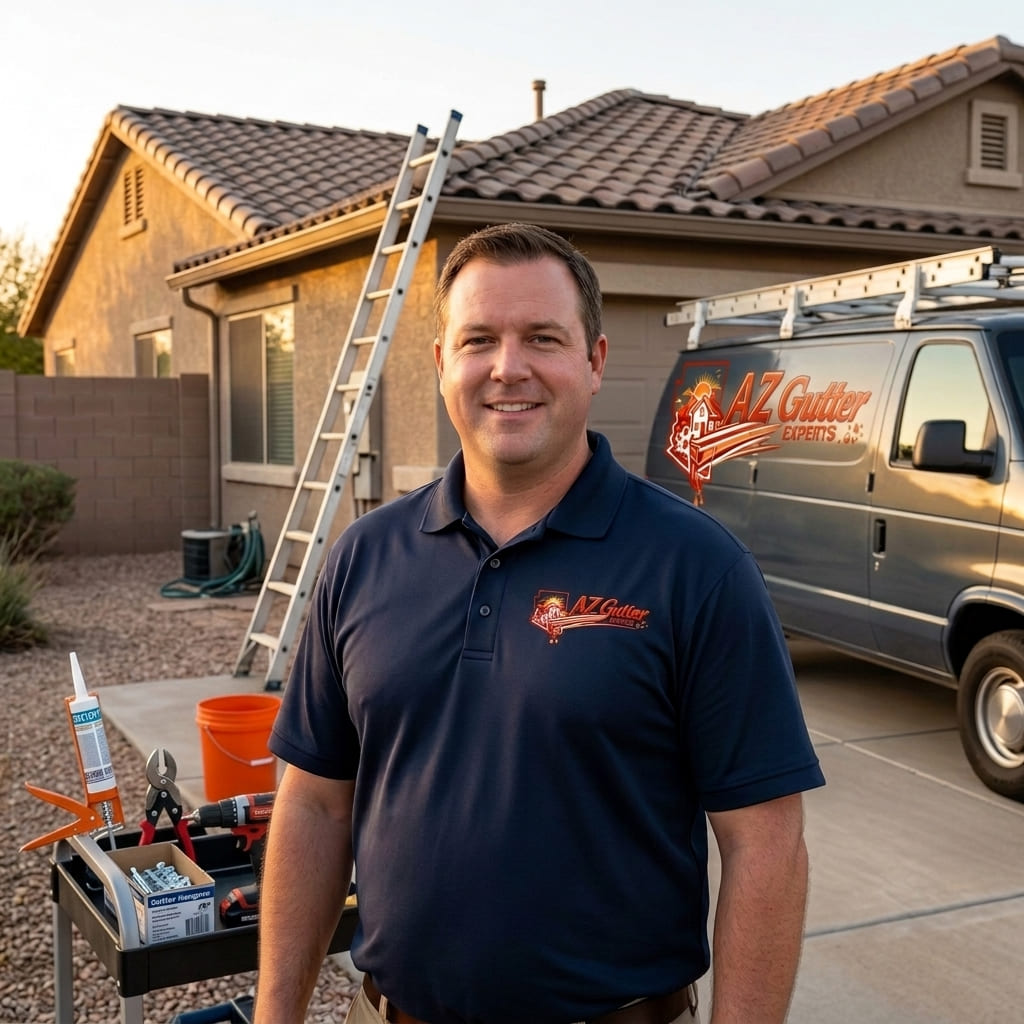
Your local gutter company in Show Low.
Show Low sits at about 6,350 feet on the Mogollon Rim, the largest town in the White Mountains and the service centre for everything around it. It gets a genuine winter — a couple of feet of snow across a season is unremarkable — but the number that actually shapes the work is not the snowfall total. It is the daily swing. Through December and January it is entirely normal for the air to climb above freezing in the afternoon and fall into the teens overnight, over and over, for weeks. Almost nowhere else we work does that as reliably.
AZ Gutter Pros covers the town and the country around it — the Deuce of Clubs corridor, the housing at Torreon and Bison Ridge, the streets around Show Low Lake and the Country Club, and out west toward Linden.
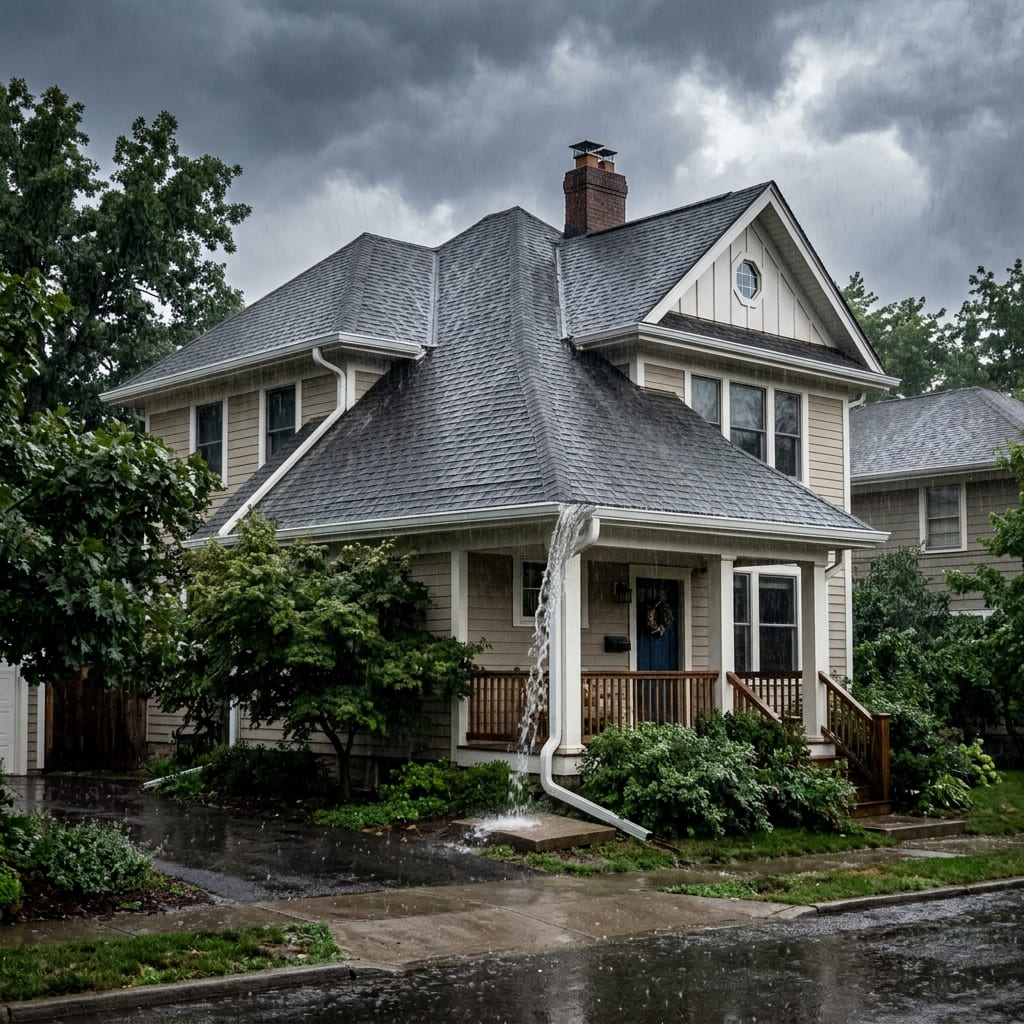
That freeze-and-thaw rhythm produces a failure that surprises people, because it happens in the part of the system nobody thinks about. Sun reaches the roof and the trough, snow melts, water runs. But the downspout on a north or north-east elevation may not see direct sun at all between November and February, and it does not have the roof above it feeding it heat. So meltwater enters a tube that is still below freezing, and it stops there. The first freeze puts a collar of ice at the bottom. The next day’s melt lands on top of it and freezes too. The plug grows upward, the leg blocks solid, and the trough above it stops being drainage and becomes a container — one that refills with every thaw and holds a great deal of weight until something gives, usually a seam or the fasteners at the fascia.
The remedy is mostly free, because it is a placement decision rather than a product.
Where the roof plan allows any choice at all, drops go on southern and western elevations, which get afternoon sun and clear themselves. Where a north wall genuinely has to carry one, it gets the treatment that buys the most margin: a larger section, the shortest and straightest path available, and a discharge you can actually see. That is the core of downspout work up here, and it is worth far more than an upgrade to the trough.
Neighborhoods & areas we cover in Show Low
Every gutter service, available in Show Low.
Seamless Gutters in Show Low, AZ
Formed in one length and hung on hidden hangers at closer centres than a desert installation uses, because a run that ices up is carrying several times the weight it was ever designed to hold in water alone.
Gutter Cleaning in Show Low, AZ
Two visits suits most properties here — after the autumn needle and leaf drop, so nothing goes into winter blocking an outlet, and again in late spring to clear what the snow packed down over the season.
Gutter Guards in Show Low, AZ
A fine mesh keeps ponderosa needles out of the trough and keeps the outlet clear going into winter, which matters more here than the saved cleaning. It does not stop ice forming, and nobody should tell you it does.
Downspout Installation & Repair in Show Low, AZ
The most important decision on a Show Low house. Larger section, minimum offsets, positioned on a sunlit elevation wherever the roof allows, and released above ground where you can see whether it is running.
Not sure which you need in Show Low? Call (602) 536-0941 and we’ll point you the right way.
The advantage of hiring locally in Show Low.
Local, so we arrive fast
Show Low sits inside the core coverage area, which means quick scheduling — often within the same week for repairs and cleanings.
We know the local weather
We size and pitch systems for how storms actually hit the White Mountains, not a mild national average that overflows in July.
Honest, written pricing
You get a clear written estimate before any work starts. The number we agree on is the number you pay — no surprises.
The trough thaws in the afternoon. The downspout on the shaded wall does not.
Once you understand that the vertical leg is the weak point, the whole specification for a house up here follows from it.
Section size comes first. A three-by-four downspout carries a little over seventy per cent more cross-sectional area than the standard two-by-three, and in freezing conditions that extra area is not about capacity — it is about how long the tube takes to bridge over with ice. A narrow leg closes in a single cold night. A larger one often survives the same night with a channel still open through the middle, and a channel is all it needs. Offsets come second. Every elbow used to step a downspout around an eave or a bump-out creates a near-horizontal section where water slows and sits, and that is where a plug starts every time. On a Show Low elevation we will take a longer route down a straight wall in preference to a short one with two offsets in it, even though the straight run uses more material. Third is the release point, and this is where a lot of otherwise good installations are undone: a downspout tied into a buried line is invisible. If that line freezes, blocks with grit, or was laid without enough fall, nothing tells you until the trough is already full and the fascia is already taking the load. We finish above ground with a visible discharge or, where a buried line is genuinely wanted, put a cleanout at the top of it so it can be checked and cleared.
Two more things about winter here that are worth saying honestly, because they set the boundary of what a gutter can do.
The first is where the water ends up. On a shaded elevation, a downspout releasing near a path or a driveway will build a sheet of ice on it by morning, every night, for months — the drainage works perfectly and you have created a hazard at the front door. So we set the release point with the winter sun in mind and carry it out beyond anywhere people walk, which occasionally means a longer run than the shortest route would suggest. The second is heat cable. There are rooflines up here where geometry alone will not solve it: a long north-facing run in permanent shade, a valley discharging onto a low roof, a house shaded by mature ponderosa on the cold side all winter. On those, self-regulating heat cable in the trough and down the leg is a legitimate answer, and it is electrical work rather than gutter work. Where that is what your building needs, we will tell you that outright rather than pretend sizing and placement will cover it. Being told which of the two problems you actually have is the useful part, and if you are weighing gutter guards at the same time, it is worth deciding both together — a guard that keeps the outlet clear in November is doing more for you in February than it gets credit for.
The mountain country around Payson runs into a related set of problems from a different direction; if you own property on both sides of the Rim, the Payson page covers what changes down there.
Good to know before you call in Show Low.
Why does only one of my downspouts freeze?
Because the sun does not reach it. A trough sitting on the roof plane picks up direct light and heat from the roof itself, so it thaws and drains most afternoons even in January. A downspout on a north or north-east wall may get no direct sun at all for three months, and it has nothing above it feeding it warmth. Meltwater from a sunlit roof runs down into a tube that is still well below freezing, stalls, and freezes at the bottom; the next melt cycle adds to it and the plug grows upward until the leg is solid. That is why the drops on the south and west side of the same house behave perfectly all winter while one elevation causes every problem you have.
Will a bigger downspout stop it icing up?
It will not stop ice forming, and anyone promising that is overselling. What a larger section does is change how long the leg takes to close. A two-by-three tube can bridge over completely in one cold night; a three-by-four has around seventy per cent more area and will often still have a channel open through the middle the following morning, which is enough to keep the run draining. Combine that with as few elbows as possible — offsets create flat spots where water lingers and plugs start — and most Show Low elevations get through a winter without incident. On the genuinely difficult ones, heat cable is the honest answer rather than a bigger tube.
Should my downspout go into a buried drain line?
It can, but not blind, and this is where we differ from a lot of installations up here. A buried line is invisible: if it ices at the outfall, silts up, or was laid without enough fall to drain, you get no warning at all until the trough above is full and the weight is on your fascia. If you want the water taken underground for appearance or because of where it has to go, we put a cleanout at the top so the line can be rodded and checked, and we make sure the outfall is somewhere you can look at in winter. Where there is no strong reason to bury it, finishing above ground with a visible discharge is the more reliable choice at this elevation.
How often do Show Low gutters need clearing?
Twice a year suits most properties, and when you do it counts for more than how often. The autumn visit is the important one: ponderosa needles and leaf drop have to be out before winter, because an outlet that is blocked in November is an outlet that will be frozen solid in January with the whole run backed up behind it. The spring visit clears what the snow packed into the base of the trough over the season, which is finer and denser than what falls in autumn and does not wash out on its own. A house sitting under mature pine may want a third look partway through the autumn drop.
What does gutter installation cost in Show Low?
Statewide, seamless aluminium sits at about $7 to $11 for a foot of finished run, and Show Low is broadly in that band, with two things that push a mountain job toward the upper end of it. Heavier hanger spacing uses more brackets, because a run that ices carries several times the weight of the water it was sized for. And larger downspout sections and longer, straighter routes use more material than the shortest path would. Neither is an upsell — they are what separates a system that survives February from one that gets re-hung in the spring. You get the whole thing written down before any work starts, with no charge for the visit and no obligation to proceed.
Serving Show Low and surrounding areas.
Proudly covering Show Low (85901) and nearby Pinetop, Lakeside, Linden, Taylor, Snowflake — plus much of the White Mountains. Not sure if you’re in range? Just call and ask.