
Gutter Installation & Repair in Page, AZ
On the Page mesa the wind sets the spec — hanger spacing, strap count, and how tight the trough sits to the roof edge. AZ Gutter Pros builds for that. Free written estimates.
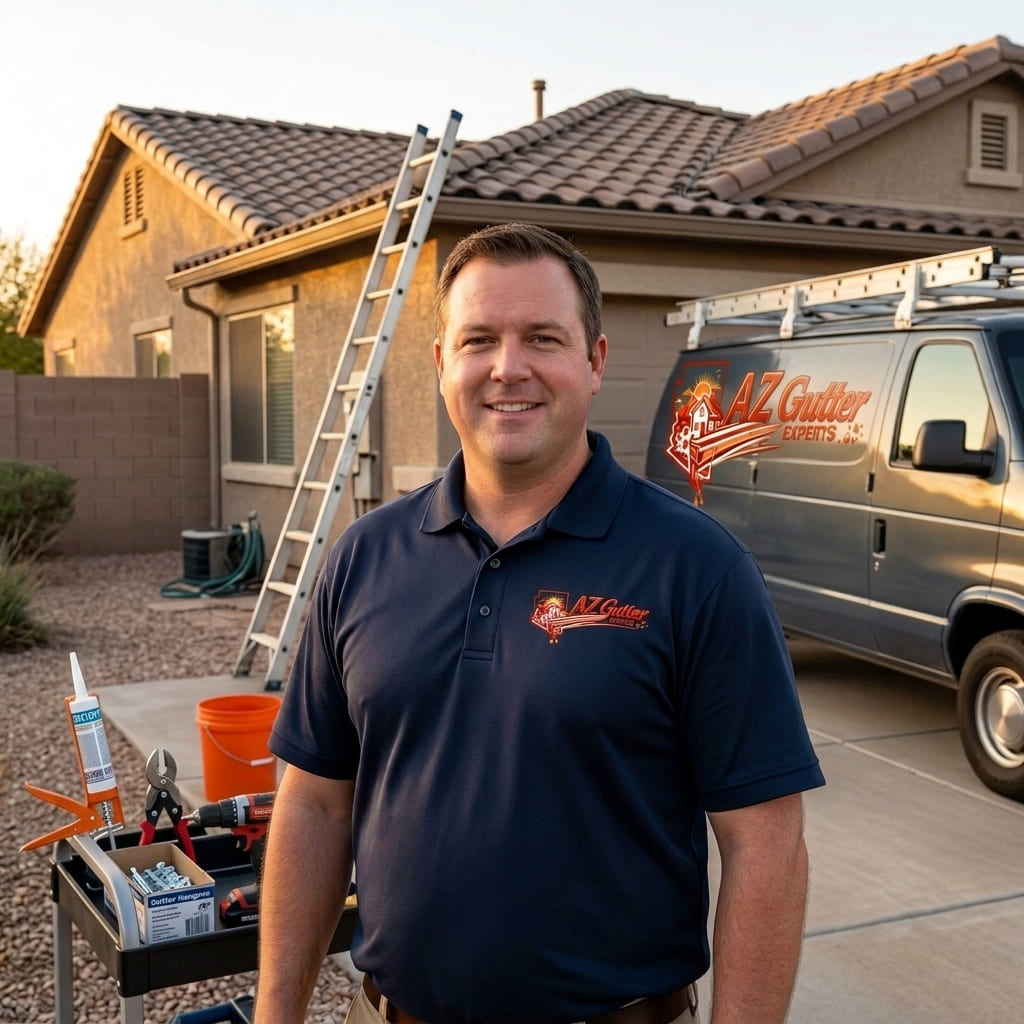
Your local gutter company in Page.
Page takes roughly 6 inches of rain a year on an exposed sandstone mesa above Lake Powell, and AZ Gutter Pros hangs gutters here to a wind specification rather than a water one. The town of about 7,400 was built from scratch from 1957 to house the Glen Canyon Dam workforce, it sits on a plateau with no mature tree cover and nothing upwind, where gusts into the forties are ordinary through spring and rain very rarely falls straight down.
We cover the original townsite on the mesa, the Lake Powell Boulevard business district, the Vista Avenue and airport side, the north end toward Greenehaven, and the properties along Coppermine Road on the south rim.
With 6 inches a year, capacity is genuinely not the constraint here and we do not price it as though it were. Two other things are. A gutter hung at a roof edge on an exposed mesa sits in the zone where wind produces its highest suction, so hanger spacing that is fine in a sheltered Valley subdivision is not adequate on this plateau — months of buffeting fatigues fasteners, opens hanger holes and rattles downspout straps loose. And rain arriving at thirty or forty miles an hour does not drop neatly into a trough at all.
So installation in Page is specified to a wind number rather than a water one.
Closer hanger centers, screwed downspout straps rather than friction fits, runs formed in one piece with no mid-run joints to work loose, and the trough set tight and high against the roof plane instead of hung low and away from it. It costs a little more than a standard hang and it removes the failure this town actually produces. We quote it free and in writing.
Neighborhoods & areas we cover in Page
Every gutter service, available in Page.
Seamless Gutters in Page, AZ
One continuous length with no mid-run joints to work loose under constant buffeting, hung on hidden hangers at closer centers than a sheltered site needs, and set tight to the roof edge.
Gutter Cleaning in Page, AZ
Almost no leaf load up here — what accumulates is wind-carried sand and grit that sets into a crust. Clearing includes the outlets and a water test, since a crusted outlet looks clean from above.
Gutter Guards in Page, AZ
A low-profile guard that does not add a surface for the wind to catch. On the mesa the honest answer is often that a guard buys little, and we will say so rather than sell one that stops nothing.
Downspout Installation & Repair in Page, AZ
Extra straps, screwed rather than friction-fitted, and a discharge carried out across the rock to a natural drainage line — because the thin soil over sandstone here absorbs almost nothing.
Not sure which you need in Page? Call (602) 536-0941 and we’ll point you the right way.
The advantage of hiring locally in Page.
Hung to a wind spec, not a water spec
Closer hanger centers, screwed downspout straps and the trough set tight to the roof edge. Standard Valley spacing is what comes loose on this mesa.
No plastic on the mesa
Vinyl troughs, hinged plastic extensions and zip-tie straps all go brittle under the UV up here. We fit metal throughout and price it that way from the start.
We quote the smaller job when it is the right one
On the most exposed elevations the real fix is the roof edge detail rather than a bigger gutter, and we will tell you that even though it earns us less.
Six inches of rain a year, and it all arrives sideways at forty miles an hour.
Wind-driven rain makes a perfectly good gutter look like a failure, and it produces three distinct jobs on a Page house.
The first is water that never reaches the trough — rain leaving the roof with a horizontal component carries past the front lip and lands on the ground as though no gutter existed. Owners call us assuming a blockage. The second is water driven up the roof slope against gravity, under the edge of the covering and down behind the fascia, which puts it inside the roof edge rather than in the gutter. That is a roof-edge detailing job: a correctly lapped drip edge carrying water forward past the fascia, and kick-out flashing where a roof edge meets a wall. A bigger trough does nothing about either, and we will not sell you one for it. The third is at the bottom, where a downspout discharging into open air on a windy elevation has its own outflow blown back against the wall you were trying to protect.
The ground is the other thing that changes what we install here.
Page sits on Navajo sandstone with only a shallow depth of fill on many lots, so water released at the base of a downspout does not soak away in any meaningful sense — it spreads across the surface and travels until it finds a low line, which is often the driveway, the neighbouring lot or the footing you were protecting. We run solid extensions out to a point where the natural fall of the lot takes the water somewhere sensible, set far enough out that the wind cannot blow the outflow straight back. Where a dry well has been suggested, we will usually tell you not to bother: the excavation bottoms out on rock a few feet down, the hole fills, and it surfaces anyway during the one hard cell of the season.
The mesa also destroys anything plastic, which is why our specification here is metal wherever metal is an option. Relentless UV at 4,300 feet with no shade turns vinyl gutters brittle and chalky until they crack at the first knock or cold snap, takes the hinged plastic downspout extensions sold everywhere apart at the hinge, and makes short work of plastic zip ties used as straps. We do not fit any of them. Aluminum or steel troughs, metal straps and screws, and solid metal extensions at the discharge cost a little more and remove an entire category of failure that has nothing to do with rain.
A Page job falls within the $7 to $11 a foot that finished seamless aluminum costs across Arizona, with the wind spec — closer hangers, extra straps, metal throughout — adding modestly to a standard hang and being the reason the system is still tight in ten years.
Two limits we state before quoting. Nothing hung on a roof edge is immune to a genuine Page gust, so the specification buys margin rather than certainty, and where a fascia is marginal or already soft we will not hang a wind-loaded run off it and call it finished. And on the most exposed elevations the real fix is the roof edge detail rather than a bigger gutter, which we will tell you even though it is the smaller job. AZ Gutter Pros also covers Flagstaff, two hours south and an entirely different problem — far more water, and ground frozen solid for three months. Call for a free estimate on the mesa.
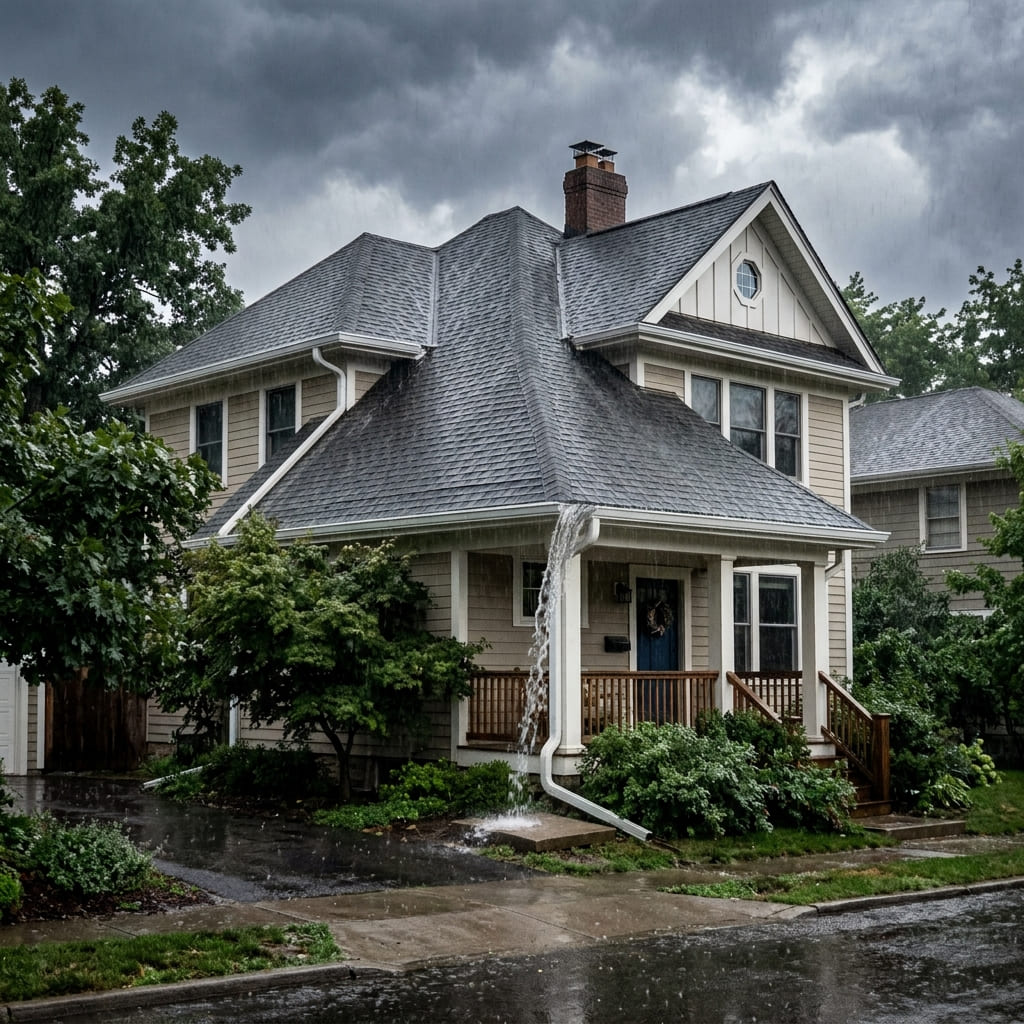
Good to know before you call in Page.
Rain runs straight past my gutter — is it blocked?
Usually not. On the Page mesa rain often arrives at a sharp angle with thirty or forty miles an hour behind it, so water leaves the roof with a horizontal component and carries clean over the front lip. The gutter is doing nothing wrong and replacing it will not help. The fixes are at the roof edge — a proper drip edge directing water forward into the trough, and setting the gutter tight and high against the roof plane rather than low and away from it.
Can wind actually pull a gutter off?
It loosens one, which is how most failures here start. Air separating over a roof creates strong suction along the edge and at the corners, and an open trough gives it something to work on. A single gust rarely rips a well-hung run off, but months of buffeting fatigues fasteners, opens hanger holes and rattles straps loose. That is why we space hangers to a wind load rather than a water load in Page and screw every downspout strap instead of relying on a friction fit.
Why is water getting behind my fascia?
Wind pressure drives it there — a strong gust pushes water up the roof slope, under the edge of the covering and down the back of the fascia board. It is a roof-edge detailing problem rather than a gutter capacity one, so a bigger trough does nothing. The remedy is a correctly lapped drip edge carrying water forward past the fascia and kick-out flashing where a roof edge meets a wall. We quote that work rather than selling a replacement gutter.
Where should my downspouts discharge on a rock lot?
Out to a point where the lot’s own fall carries the water away, on solid extensions rather than dropped at the wall. Page sits on Navajo sandstone with shallow fill, so released water does not soak in — it spreads and travels until it finds a low line, often the driveway, the neighbouring lot or the footing you meant to protect. We also set the release far enough out that the wind cannot blow the outflow back against the wall.
Is a dry well a good idea in Page?
Rarely, and we would rather say so than dig one and take the money. A dry well only works if the surrounding ground absorbs water, and on much of the mesa the excavation hits sandstone within a few feet. Once it fills it has nowhere to send the water, so it backs up and surfaces anyway during a hard cell. Carrying the discharge across the surface to a sensible release point costs less and works on this geology.
Serving Page and surrounding areas.
Proudly covering Page (86040) and nearby Greenehaven, LeChee, Big Water, Kaibito, Fredonia — plus much of the Glen Canyon country. Not sure if you’re in range? Just call and ask.